The best candidate sourcing software depends on where your candidates live and how many roles you fill at once. A recruiter who hires engineers needs a tool that searches GitHub and publications. A People Ops team that hires 20 people a year in one city may only need an ATS with a sourcing tab. A team whose hires are on LinkedIn may need nothing more than LinkedIn itself. This page compares seven tools, grouped by how they find candidates, and it looks at what each one does before and after the first message goes out.
Prices and features come from vendor pricing pages, product pages and help centers read on November 1, 2026. Several vendors publish no price beyond an entry plan, so we say "quote only" instead of repeating a third party's estimate. Ratings come from G2, and the praise and complaint lines are G2's own summarized review themes, not quotes. We didn't run hands-on trials, so every entry describes documented features.
- tools compared
- 7
- publish an entry price
- 6
- publish a contact-lookup allowance
- 3
- profiles claimed by the largest databases
- 1B+
Best Candidate Sourcing Software by Situation
 Best for plain-language search on a small budgetJuicebox (PeopleGPT)Describe the person you want and get a ranked pool, from $99 per seat per month billed yearly.
 Best for a self-serve start with stated creditsSeekOutSourcing Core lists 3 seats, 500 contact credits and 1,000 exports a month.
 Best if you run Greenhouse, Lever or WorkdayGemSearch, sequences and talent CRM that sync both ways with the ATS.
 Best when your hires are on LinkedInLinkedIn RecruiterInMail and search inside the network; ATS sync is on the full Recruiter plan.
 Best for sourcing and ATS in one recordAshbyA sourced prospect who applies is already in the pipeline, with no sync to break.
 Best for layering on an enterprise ATShireEZSearch and talent CRM that sit on top of Workday, SAP SuccessFactors, iCIMS or Greenhouse.
 Best for job-board sourcing on a small budgetZoho RecruitCross-posting to 75+ boards and resume-database imports from a low per-recruiter price.
Candidate Sourcing Software at a Glance
| Tool | Type | Starting price (USD) | Rating |
|---|---|---|---|
| Juicebox (PeopleGPT) | AI candidate search and outreach | $99 per seat per month billed yearly; $119 monthly; free plan | 4.8 (79) |
| SeekOut | AI talent search and sourcing | $149 per month billed annually; $179 monthly | 4.5 (799) |
| Gem | AI sourcing, recruiting CRM and ATS | $130 per month billed yearly for 1 to 10 employees; otherwise quote | 4.7 (311) |
| LinkedIn Recruiter | Network-based sourcing | Quote only; Lite is monthly or yearly with no dollar amount on LinkedIn pages | 4.5 (442) |
| Ashby | All-in-one recruiting platform | $400 per month for up to 100 employees | 4.7 (250) |
| hireEZ | AI sourcing and recruiting CRM | $494 per month for solo recruiters; enterprise quote | 4.6 (264) |
| Zoho Recruit | ATS in the Zoho suite | EUR 25 per recruiter per month (about $30 per Zoho on G2) | 4.4 (1,869) |
 The People Ops Manager Our product | Onboarding coordination | Subscription via Stripe Checkout, card required | No reviews yet |
Prices are the entry plans we found on vendor pages on November 1, 2026. Quote only means the vendor doesn't publish a price. Ratings are G2.
What Is Candidate Sourcing Software?
Candidate sourcing software helps a recruiter find and contact people who haven't applied yet. That usually means searching a database of professional profiles, pulling contact details, sending a sequence of messages and keeping the replies in a talent pool for later. An applicant tracking system (ATS) starts when someone applies. Candidate sourcing starts earlier, with a name and a reason to get in touch.
Examples of candidate sourcing software include Juicebox, SeekOut, Gem, LinkedIn Recruiter, Ashby, hireEZ and Zoho Recruit. They fall into three types: database and AI search tools, network and CRM-led tools, and applicant tracking systems with built-in sourcing. Those types differ on four jobs, which are also the columns in the data-source matrix further down.
- Pool. Where do the candidates come from: a vendor's own profile database, one network, or what your team adds by hand?
- Contact data. Does the tool return a work or personal email, and is the number of lookups capped?
- Outreach. Can it run a multi-step sequence, and does a person approve the copy?
- Handoff. When a sourced candidate says yes, does the record move into your ATS automatically?
- Pick the pool first: a database tool, LinkedIn itself, or the candidate history inside your ATS each fit different hires.
- Contact data is metered. SeekOut lists 500 credits a month on its entry plan, Juicebox lists 500 per seat, and Ashby includes 200 email lookups on every plan.
- Only Juicebox, SeekOut, hireEZ and Ashby publish a price you can budget from without a call, and Gem does for companies of 1 to 10 employees.
- Check the handoff before you buy: ATS sync is on a higher plan for Juicebox and for LinkedIn Recruiter, and it's native in Ashby.
Where Each Tool Gets Its Candidates
Most comparison pages call every tool "AI-powered" and stop there. For a People Ops team the more useful question is what the tool actually searches, what comes back with a candidate and where the record goes. The table below sorts the seven tools on what their own pages document. Database sizes are the vendors' claims, and none of the pages we read names every underlying source.
| Tool | Where candidates come from | Contact data | Outreach | Handoff to your ATS |
|---|---|---|---|---|
| Juicebox (PeopleGPT) | About 800 million profiles from 30+ sources (vendor claim) | 500 credits per seat per month on Starter; emails cost 1 credit | Email sequences from connected mailboxes; recruiter approves copy | Business plan only |
| SeekOut | 1B+ profiles plus your own ATS | 500 credits and 1,000 exports a month on Sourcing Core | Multi-touch campaigns with AI-drafted messages and follow-ups | Bidirectional sync with Greenhouse, Lever, Workday, Ashby and others |
| Gem | 800M+ profiles (vendor claim), plus LinkedIn and 20+ other sites through an extension, plus your ATS history | Verified emails; Gem claims a 98% delivery rate | Email, SMS or InMail sequences with recruiter approval | Real-time two-way sync with Greenhouse, Lever, Workday, iCIMS; or Gem's own ATS |
| LinkedIn Recruiter | LinkedIn members; size not stated | InMail credits: 30 per seat per month on Lite, 150 on Recruiter | InMail with AI-assisted drafting; bulk InMail to 25 candidates | 28+ ATS partners on Recruiter; none shown for Lite |
| Ashby | Prospects added through a Chrome extension from LinkedIn, GitHub and Gmail, plus your history | 200 email lookups on every plan; more cost extra | Multi-step email and LinkedIn sequences | Native, because Ashby is the ATS |
| hireEZ | 1B+ profiles across 45+ platforms (vendor claim) | Not described on pages read | Talent CRM campaigns | Sits on top of Workday, SAP SuccessFactors, iCIMS or Greenhouse |
| Zoho Recruit | Resume databases on job boards such as Monster and CareerBuilder, social channels, referrals | Not described on pages read | No outbound sequences found | Native, because Zoho Recruit is the ATS |
Two patterns stand out. The tools with the biggest claimed databases mostly meter contact data, so the credit allowance matters more than the profile count. And the handoff column is where the cheaper plans stop: Juicebox lists ATS or CRM integration only on its custom-priced Business plan, and LinkedIn shows no ATS integration for Recruiter Lite.
From Sourced to Started: Who Owns Each Step
A sourcing tool ends at the reply. Someone still has to decide who may be contacted, who approves the offer and who makes sure the new hire has a laptop. The failure that comes up most is a candidate who says yes to a recruiter, then waits because nobody owns what happens next. This is the sequence we'd set up whichever tool you buy. It's our recommended process rather than a vendor feature list.
- Hiring managerWrite the intake: must-haves, nice-to-haves and two or three example profiles of people you'd hire before the search
- RecruiterBuild the search from the intake and save it with a note on which source it used day 1
- People Ops or legalCheck how the tool handles candidate data: opt-out, retention and any bias audit for its AI features once per tool, before the first send
- RecruiterReview the sequence copy and send; set a stop rule for replies and opt-outs week 1
- Recruiter and hiring managerMove interested replies into the ATS so the record, source and notes live in one place week 2
- People OpsApprove the offer and record the sourcing channel for later reporting offer
- People Ops, IT and managerStart onboarding tasks the day the offer is accepted: equipment, accounts, paperwork and a day-one plan acceptance to day -7
How We Compared the Tools
We looked at seven tools and read the same four kinds of source for each where they were available: a pricing page, a product or feature page, a help center or documentation page, and a review source. We then recorded the same facts for every tool, which are the columns in the matrix above.
- Evidence. Everything is dated November 1, 2026. Where a page was blocked or didn't say, the entry says "we found none" rather than claiming the feature doesn't exist.
- Ratings. G2 star ratings and review counts were read from each product's G2 page. Review text didn't load for every product, so praise and complaint lines are G2's summarized themes, and for SeekOut and Juicebox we don't give a theme because none was readable.
- Left out. Fetcher appeared in search results for this keyword, but its homepage now carries a banner saying Juicebox acquired its assets, so we didn't include it. Several other tools, such as Loxo and Findem, weren't covered.
- No sponsored placements. We didn't use affiliate links and don't link to vendor sites.
Database and AI Search Tools
Juicebox, SeekOut and hireEZ sell access to a large profile database with AI search on top. They suit a recruiter who needs to find passive candidates for roles the careers page can't fill. They differ on how much of the contact-data and credit terms they state publicly.
Juicebox (PeopleGPT)
Juicebox is an AI recruiting platform whose PeopleGPT search finds candidates from a stated 800 million profiles using natural-language prompts, with email sequences and AI agents on top.
Juicebox lets a recruiter describe the ideal candidate in plain language and returns a ranked pool, with a free plan and paid plans that start at $99 per seat per month billed yearly.
The vendor states about 800 million profiles from 30+ data sources, and doesn't name them on the pages we read. Contact details are unlocked with credits: 500 per seat per month on Starter and 1,500 on Growth. G2 shows 4.8 from 79 reviews, but the review text didn't load, so we can't give a recurring strength or complaint. The pricing page doesn't say directly which figures are monthly and which are yearly, so confirm before you budget.
- You need to find passive candidates by describing a role in plain language and want entry pricing near $99 to $119 per seat per month
- Your ATS is Greenhouse, Lever, Ashby, SmartRecruiters or Workday and you can take the Business plan for the sync
- You need ATS or CRM sync on a small budget: it is listed only on the custom-priced annual Business plan
- You need to know the exact data sources or LinkedIn handling: we found none stated on Juicebox's pages we read, so ask in a demo
- Users like
- No review themes read
- Users dislike
- No review themes read
- Source: G2, 79 reviews
How a search runs in it
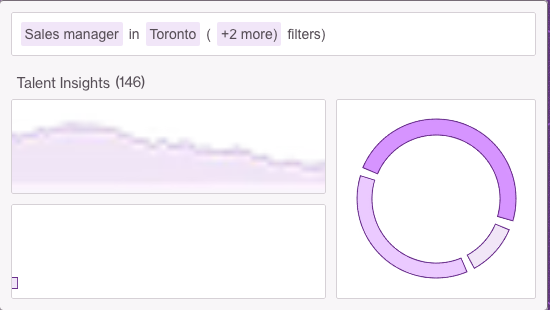
A recruiter writes the role in plain language, narrows the pool with filters and shortlists. Emails cost one credit and phone numbers cost three on Growth. Outreach runs as AI-personalized sequences from connected mailboxes, one on Starter, three on Growth and six on Business, and the recruiter approves the copy. Bulk export is capped at 100 per export on Starter, 250 on Growth and 500 on Business. ATS or CRM integration and usage analytics are listed only on the custom-priced Business plan. The trust center states SOC 2 Type II, GDPR compliance, US-only hosting and a bias audit under New York City Local Law 144; it doesn't describe CCPA handling or a candidate opt-out process.
- Starting price
- Starter $119 per seat per month billed monthly or $99 per seat per month billed yearly; Growth $179 per seat per month billed yearly or $199 monthly (up to 5 seats); Business is custom and annual only; Juicebox Agents add-on $199 per agent per month. The vendor page does not state directly which figure is monthly versus yearly; a third-party report lists Starter $119 monthly and Growth $199 monthly.
- Pool
- About 800 million profiles from 30+ sources (vendor claim)
- Credits
- 500 contact credits per seat per month on Starter
- Compliance
- SOC 2 Type II, GDPR, NYC Local Law 144 bias audit stated on trust center
SeekOut
SeekOut is an AI talent search platform with a 1B+ profile database, multi-touch outreach campaigns, ATS sync and diversity analytics.
SeekOut is the one tool here that states its entry allowances in numbers: Sourcing Core lists 3 seats, 500 contact credits and 1,000 exports a month for $149 per month billed annually.
Sourcing Core costs $179 per month billed monthly, and there's a 14-day trial with no credit card. Higher tiers are custom priced and billed annually. G2 shows 4.5 from 799 reviews, though review text didn't load. The pricing page doesn't define what a contact credit is, so ask whether a credit buys an email, a phone number or both.
- You need sourcing that syncs both ways with an ATS such as Greenhouse, Lever, Workday or Ashby, and diversity and OFCCP reporting
- A small team wants a self-serve entry at $149/mo annual with a 14-day trial before talking to sales
- You need published pricing for more than three seats: Sourcing and above are custom priced, billed annually
- You need a defined contact-credit policy or opt-out process: we found none on SeekOut's pricing or homepage pages (credits are capped but not defined)
- Users like
- No review themes read
- Users dislike
- No review themes read
- Source: G2, 799 reviews
How a campaign runs in it
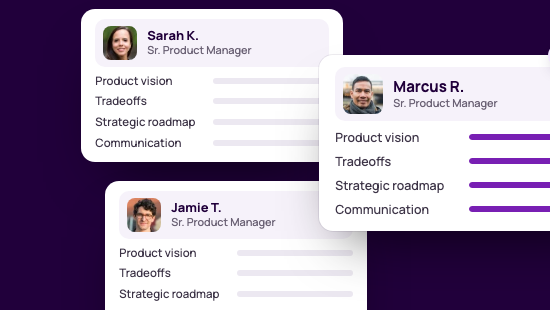
AI Intelligent Search goes beyond keywords and draws on signals such as patents, GitHub and publications, which is why technical recruiters shortlist it. Profiles are auto-enriched, and a Chrome extension enriches profiles from other sites. Outreach runs as multi-touch campaigns with AI-drafted messages and follow-ups, for example at day 3 and day 7. ATS sync is bidirectional and the integration list includes Ashby, Greenhouse, Lever, Workday, iCIMS, SAP SuccessFactors and SmartRecruiters. Diversity Analytics show pipeline diversity by department and OFCCP readiness. The homepage cites a September 2025 bias audit, and we didn't read the report.
- Starting price
- Sourcing Core: $149/mo billed annually upfront ($1,788/yr) or $179/mo billed monthly; includes 3 seats, 500 contact credits/mo, 1,000 exports/mo. Sourcing, Sourcing + Integration and Full Recruiting Funnel are custom priced, billed annually.
- Pool
- 1B+ profiles plus your ATS
- Credits
- 500 contact credits and 1,000 exports a month on Sourcing Core
- Trial
- 14 days, no card
hireEZ
hireEZ is an AI recruiting platform that combines candidate sourcing across 45+ platforms, a talent CRM, outreach campaigns and hiring analytics, running on top of an existing ATS.
hireEZ layers AI sourcing and a talent CRM on top of an existing ATS, and it's the only tool here whose pages name Workday, SAP SuccessFactors, iCIMS and Greenhouse side by side as the base.
The homepage describes 1B+ profiles across 45+ platforms covering the open web, deep search and partner networks. The pricing page lists $494 per month for solo recruiters with a 7-day free trial, and enterprise pricing is set after a four-week verification. G2 shows 4.6 from 264 reviews, with ease of use and features as recurring strengths and contact information accuracy and cost as recurring complaints.
- You run Workday, SAP SuccessFactors, iCIMS or Greenhouse and want sourcing and CRM layered on top rather than replacing the ATS
- You are a solo recruiter who wants to trial a sourcing tool for 7 days at a published entry price
- You need published enterprise or per-seat pricing: we found none beyond the $494/mo solo entry on hireEZ's pricing page
- You need clear contact-data and credit terms before buying: we found none described on hireEZ's homepage, pricing or blog pages, and G2's recurring negative themes include contact information accuracy
- Users like
- G2's aggregated positive themes: ease of use, features, easy access, efficiency, sourcing
- Users dislike
- G2's aggregated negative themes: contact information (inaccurate or hard to manage) and cost issues
- Source: G2, 264 reviews
How a campaign runs in it
Top candidates go into the Talent CRM, where campaigns send personalized emails and a nurturing feature handles high-volume messaging. Hiring Intelligence reports funnel metrics, and full-funnel questions can be asked in plain language. We found no description of contact data, email credits or sequence mechanics on the pages we read, and billing terms for the solo plan aren't stated. Ask for the contact-data source and the accuracy policy in the demo, because G2 reviewers flag it.
- Starting price
- Solo recruiters start at $494/mo with a 7-day free trial. Enterprise pricing is configured after a four-week verification; billing terms, credits and seat limits are not stated on the pricing page.
- Pool
- 1B+ profiles across 45+ platforms (vendor claim)
- Trial
- 7 days on the solo plan
- Contact terms
- Credits and contact-data sources not described on pages read
Network and CRM-Led Sourcing
LinkedIn Recruiter and Gem start from a network or from your own candidate history instead of selling a standalone database. They fit teams that already source mostly on LinkedIn or that already run a major ATS.
LinkedIn Recruiter
LinkedIn Recruiter is LinkedIn's paid talent search and outreach platform, with Recruiter Lite as the self-serve plan for individuals and small teams.
LinkedIn Recruiter searches LinkedIn members directly and contacts them with InMail, which makes it the default for roles where nearly every candidate has a LinkedIn profile.
The full Recruiter plan is sold through LinkedIn sales with no published price. Recruiter Lite is sold online as a monthly or yearly subscription, and the pages we read show no dollar amount. G2 shows 4.5 from 442 reviews, with recruiting efficiency, ease of use and search as strengths and price, search limits and messaging problems as complaints.
- Your hires are mostly professionals with a LinkedIn profile and you want InMail and search without a third-party data layer
- You already run one of the ATS partners and want sourced candidates to sync into it on the full Recruiter plan
- You need ATS sync on a self-serve plan: we found no ATS integration listed for Recruiter Lite on LinkedIn's pages
- You need a published, fixed price for a team: the full Recruiter plan is contact-sales only, and G2 reviewers most often cite price as a drawback
- Users like
- G2's review summary lists recruiting efficiency, ease of use, search function and LinkedIn integration as top positives.
- Users dislike
- G2's review summary lists expensive, insufficient search functionality, messaging problems and slow processing as top negatives.
- Source: G2, 442 reviews
How a search and InMail run in it
Recruiter has 40+ filters and unlimited network access, while Lite has 20 filters and reaches up to 3rd-degree connections. InMail allowances are 30 per seat per month on Lite and 150 on Recruiter, and Recruiter allows bulk InMail to up to 25 candidates at once. An add-on called Hiring Assistant can run searches from a stated hiring goal. Recruiter can connect to 28+ ATS partners and includes 20 free collaborator licenses per license, so hiring managers can view projects. Lite supports up to 5 seats and shows no ATS integration. Candidate database size isn't stated on the pages we read.
- Starting price
- Quote only: USD price not published. Recruiter (Corporate and Professional Services tiers) is sold via LinkedIn sales, cost depends on company size and seats, Hiring Assistant is an extra charge. Recruiter Lite is sold online as a monthly or yearly subscription, cancelable anytime; LinkedIn's own pages we read show no dollar amount (third-party sources report about $170 per month, unconfirmed).
- InMail
- Lite 30 per seat per month; Recruiter 150
- Filters
- Recruiter 40+; Lite 20, up to 3rd-degree connections
- Collaborators
- 20 free collaborator licenses per Recruiter license
Gem
Gem is an AI recruiting platform combining candidate search, outreach, talent CRM, scheduling, analytics and an optional built-in ATS.
Gem combines AI search, outreach sequences and a talent CRM, and it syncs both ways with the ATS you already run, or it can replace the ATS.
Gem lists a startup plan at $130 per month billed yearly for companies of 1 to 10 employees, and every other plan is quoted from the company's headcount. Companies under 30 employees can use Gem free for six months. G2 shows 4.7 from 311 reviews, with ease of use, efficiency and time savings as strengths and integration problems, price and limited reporting as complaints.
- You run Greenhouse, Lever, Workday or iCIMS and want sourcing, outreach and CRM synced into it
- You are under 30 employees and can use the six free months, or want one system for ATS, CRM and scheduling via Gem All-in-One
- You need a published price per seat for budgeting: we found only the 1 to 10 FTE startup price, all other plans are FTE-based quotes
- Cost and integration issues matter most: G2's review summary lists 'Expensive' and 'Integration Issues' among top cons
- Users like
- G2's review summary lists ease of use, efficiency, features and time savings as top positives.
- Users dislike
- G2's review summary lists integration problems, expensive, limited customization and limited reporting as top negatives.
- Source: G2, 311 reviews
How a sourcing project runs in it
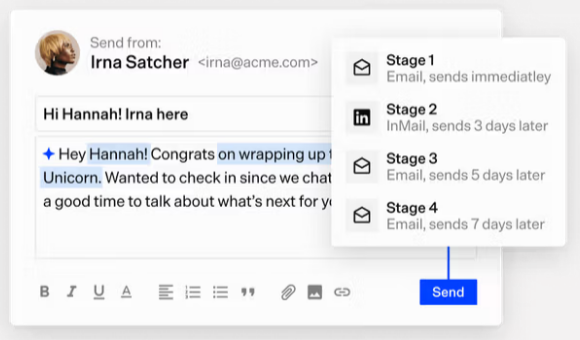
A recruiter describes the role in plain language, and Gem builds a search across what it calls 800M+ profiles while also suggesting past candidates from the ATS and CRM. A Chrome extension adds profiles from LinkedIn and 20+ other sites. Sequences go out over email, SMS or InMail and the recruiter approves them before sending, optionally on behalf of a hiring manager. Gem describes sync with Greenhouse, Workday, Lever, iCIMS and others as bidirectional and real time. Customers without an ATS can use Gem All-in-One. We read no help-center page for Gem, and its stance on LinkedIn terms for extension-added profiles isn't stated on the pages we read.
- Starting price
- Quote only for Gem + Your ATS and Gem All-in-One: custom pricing based on company FTE count. Gem Startup Program (1 to 10 FTE): $130 per month, billed yearly (10% off).
- Pool
- 800M+ profiles plus your ATS and CRM history
- Outreach
- Email, SMS or InMail sequences with recruiter approval
- Free
- Free for six months under 30 employees
ATS Platforms With Built-In Sourcing
If you hire 10 to 50 people a year, a separate sourcing database may cost more than it returns. Ashby and Zoho Recruit put sourcing inside the applicant tracking system, so a prospect and an applicant are the same record.
Ashby
Ashby is an all-in-one recruiting platform with a published $400 monthly starting price for companies up to 100 employees, plus built-in scheduling, analytics and offer approvals on higher tiers.
Ashby is an ATS with a native sourcing CRM, so a prospect added from LinkedIn who later applies stays on one record and needs no sync between tools.
Foundations is listed at $400 per month for up to 100 employees, and Plus and Enterprise are quote only. The Chrome extension and 200 sourcing email lookups are included on all three plans, and extra lookups are paid add-ons. G2 shows 4.7 from 250 reviews, with ease of use and support as strengths and a learning curve and limited customization as complaints. Those themes aren't specific to sourcing.
- you are a startup or growth-stage company that wants one product for the pipeline, scheduling and reporting
- you use Rippling or Workday and want a documented hired push
- you are under 101 employees but need offer approvals: they are not on Foundations, and the next tier is quote only
- you need SSO, texting, advanced scheduling or the AI notetaker: each is a paid add-on or a higher tier
- you are a federal contractor that needs documented EEO-1 or OFCCP workflows: we could not confirm them
- Users like
- ease of use, customization and responsive support, per G2 summaries in search results
- Users dislike
- a learning curve and limited or unintuitive reporting for some users, per G2 summaries
- Source: G2, 250 reviews
How a prospect becomes an applicant
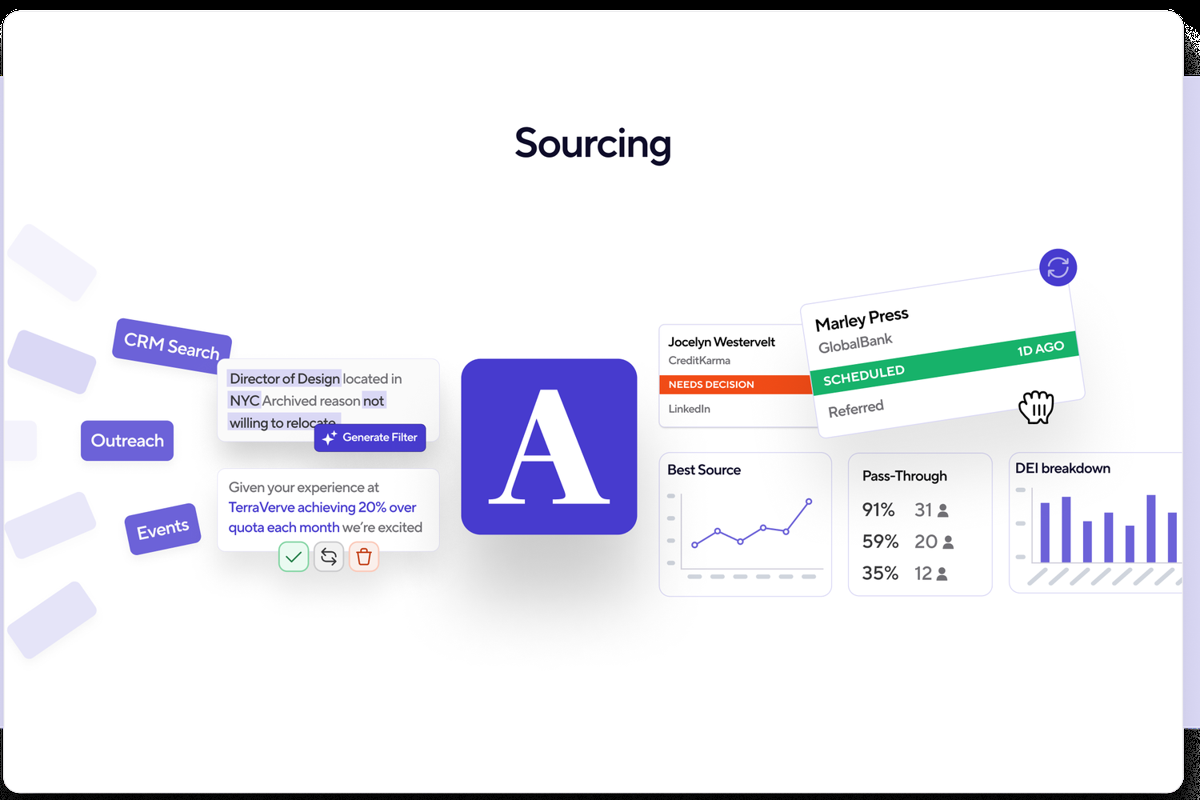
The extension works on LinkedIn, GitHub and Gmail and lets a recruiter consider a prospect for a job, add them to a project, tag them, send a sequence or log outreach. It needs Elevated Access (Hiring Manager) or higher. Sequences are multi-step over email and LinkedIn, and replies are classified as interested or not interested. The extension records the site a candidate was sourced from, which makes source reporting possible. AI credits are 1,500 per month on Foundations. We found no candidate database size and no statement of where the lookup data comes from.
- Starting price
- Foundations $400 per month for up to 100 employees; Plus and Enterprise are quote only; 200 sourcing email lookups included, extra lookups are paid
- Plans
- Foundations (up to 100 employees), Plus (101 to 1,000), Enterprise (1,000+)
- AI audit
- Says it commissioned a third-party bias audit of its screening features and states it does not treat its tooling as an AEDT under NYC law
- Integrations
- 250+, including Slack, Google, Microsoft 365, Rippling, Workday and Checkr
- Sourcing
- Chrome extension for LinkedIn, GitHub and Gmail; multi-step email and LinkedIn sequences
- Email lookups
- 200 included on every plan; more cost extra
Zoho Recruit
Zoho Recruit is a low-cost applicant tracking system priced per recruiter, with a free tier, offer approvals and a direct link to Zoho People for onboarding.
Zoho Recruit sources by cross-posting to 75+ job boards and importing from resume databases, which suits small teams that fill roles with active job seekers instead of passive outreach.
Zoho's own pricing page showed EUR 25, 50 and 75 per recruiter per month on annual billing for Standard, Professional and Enterprise. Zoho lists USD $30, $60 and $90 on G2, without stating the billing basis. There's a Forever Free plan, but sourcing, social recruiting and talent pools start at Standard. G2 shows 4.4 from 1,869 reviews, with ease of use, integrations and customization as strengths and a steep learning curve as the main complaint.
- you already run Zoho CRM or Zoho People and want hired candidates to land in Zoho People onboarding
- you want offer approval rules tied to criteria such as a compensation limit at a low per-recruiter price
- you need a confirmed US dollar price before a demo: Zoho's pages showed euro pricing when we checked
- you use a different HRIS: the documented hired handoff targets Zoho People only
- you hire at volume on Standard: it caps you at 10 active jobs per recruiter
- Users like
- ease of use, customizability and integrations, per G2 summaries in search results
- Users dislike
- setup effort, support response times and limited career-page customization, per G2 and Capterra summaries
- Source: G2, 1,869 reviews
How sourcing runs in it
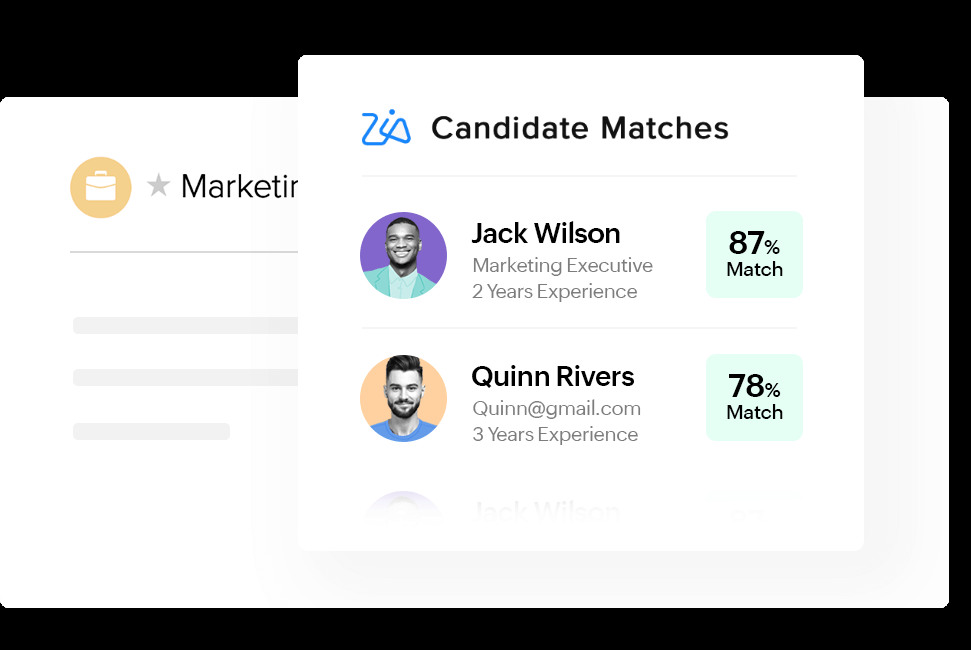
Source Boosters search resume databases on boards such as Monster and CareerBuilder and import candidate details into Zoho Recruit. Imported and applied candidates sit in one database and can be grouped into talent pools by location, industry and skills. Zia Matches compares profiles with a job opening and assigns a match score, and the pricing page lists AI candidate matching from Professional. We found no outbound sequence feature on the sourcing pages we read, so it's not a Juicebox or Gem replacement for passive outreach.
- Starting price
- Standard EUR 25, Professional EUR 50, Enterprise EUR 75 per recruiter per month on annual billing (Zoho's EUR page); USD $30, $60 and $90 per recruiter per month as listed by Zoho on G2, billing basis not stated. Free plan: 1 active job, no sourcing
- Plans
- Free, Standard EUR 25, Professional EUR 50, Enterprise EUR 75 per recruiter per month on annual billing
- Active jobs
- 10 per recruiter on Standard, 20 on Enterprise
- Compliance
- OFCCP and EEO switch under Settings, with 1 or 2 year retention
- Sourcing
- 75+ job boards, Source Boosters import from resume databases, talent pools from Standard
How Much Does Candidate Sourcing Software Cost?
Candidate sourcing software costs less than most buyers expect at the entry level. Six of the seven tools publish some entry price, but only Juicebox, SeekOut and Ashby publish a number that includes a stated contact allowance. Everything above the entry plan is mostly a quote.
| Tool | Entry price (USD unless stated) | Free option |
|---|---|---|
| Juicebox (PeopleGPT) | $99 per seat per month billed yearly; $119 monthly; Growth $179 yearly or $199 monthly | Free plan with limited searches and 5 one-off contact credits |
| SeekOut | $149 per month billed annually or $179 monthly for 3 seats | 14-day trial, no card |
| Gem | $130 per month billed yearly for 1 to 10 employees; other plans quoted | Six free months under 30 employees |
| LinkedIn Recruiter | Recruiter quoted; Lite has no dollar amount on LinkedIn pages | Lite trial for one month, card required |
| Ashby | Foundations $400 per month for up to 100 employees | None found |
| hireEZ | $494 per month for solo recruiters; enterprise quoted | 7-day trial |
| Zoho Recruit | EUR 25, 50 and 75 per recruiter per month annually | Forever Free plan, 1 active job, no sourcing |
Free sourcing is clearly limited everywhere we looked. Juicebox's free plan lists 5 one-off contact credits and no exports. Zoho's free plan excludes sourcing. When you request quotes, ask each vendor for the same things: the contact allowance per seat, what happens when it runs out, which plan includes ATS sync, and whether AI features are metered.
How to Choose Candidate Sourcing Software
Choosing candidate sourcing software comes down to two scoping questions, the role types you hire for and your team size or budget. The table maps those answers to a starting shortlist. It's a starting point, of course, and a demo run on one of your own open roles is what settles it.
- Engineering and technical rolesSeekOut or hireEZ for deep search; Gem if you already run Greenhouse or Lever
- Professional roles where candidates are on LinkedInLinkedIn Recruiter, with Gem or Juicebox if you need contact data beyond InMail
- Under 10 hires a year, one recruiter, tight budgetJuicebox from $99 per seat, or an ATS with sourcing such as Ashby or Zoho Recruit
- Under 100 employees and you want one systemAshby, or Gem All-in-One
- Enterprise ATS you won't replacehireEZ, SeekOut or Gem on top of it
- Mostly active job seekers and job boardsZoho Recruit
Compliance and Candidate Data
Sourcing tools process personal data about people who never applied, and some use AI to rank them. Three checks are worth doing before you sign.
- Automated hiring tools. New York City Local Law 144 requires a bias audit for automated employment decision tools used on candidates for jobs in the city. Juicebox states it has an audit under that law, SeekOut's homepage cites a September 2025 audit and Ashby says it commissioned a third-party audit of its screening features. We didn't read the underlying reports, so ask for them.
- Privacy. Juicebox's trust center states GDPR compliance. For the others we found no clear CCPA or candidate opt-out statement on the pages we read, so ask how a sourced person can ask to be removed.
- LinkedIn data. Several tools add LinkedIn profiles through a browser extension. None of the pages we read explain how that fits LinkedIn's terms, so ask each vendor and have legal review the answer.
Where Onboarding Coordination Fits After the Offer
Where onboarding coordination fits after the offer comes down to one gap: a sourcing tool and an ATS end when the candidate accepts, and nothing in them knows that the new hire's laptop is on backorder or that an access request is waiting for an approval. The People Ops Manager covers that gap. It coordinates onboarding and offboarding across HR, IT, finance and hiring managers, and it works alongside your HRIS and ATS. It doesn't source candidates. Once someone accepts, our guides to employee onboarding software, the onboarding process and the employee onboarding checklist go further, and for the tools that take applications, see our comparison of applicant tracking software.
Frequently Asked Questions
What is candidate sourcing software?
Candidate sourcing software is a tool that helps recruiters find and contact people who haven't applied. It searches a profile database or network, returns contact details, runs outreach sequences and keeps replies in a talent pool. An applicant tracking system starts when someone applies, and sourcing starts earlier.
How much does candidate sourcing software cost?
Candidate sourcing software costs from about $99 per seat per month to several hundred dollars a month for entry plans. Juicebox lists $99 per seat per month billed yearly, SeekOut lists $149 per month for three seats billed annually, Gem lists $130 per month for companies of 1 to 10 employees, Ashby lists $400 per month and hireEZ lists $494 per month for solo recruiters. LinkedIn Recruiter is quote only.
Is there free candidate sourcing software?
Free candidate sourcing software exists but it's heavily limited. Juicebox has a free plan with limited searches and 5 one-off contact credits, Gem is free for six months for companies under 30 employees, and SeekOut offers a 14-day trial without a card. Zoho Recruit's free plan excludes sourcing.
What is the difference between an ATS and sourcing software?
An ATS manages people who apply, and sourcing software finds people who haven't. Some products do both: Ashby and Zoho Recruit include sourcing inside the ATS, while Gem, SeekOut and hireEZ connect to the ATS you already use.
Do sourcing tools need to comply with hiring AI laws?
Some sourcing tools do need to comply with hiring AI laws. New York City Local Law 144 requires a bias audit for automated employment decision tools used on candidates for jobs in the city. Ask each vendor whether its AI features fall under it and for the audit summary, and have legal check privacy obligations for people you contact.